Pocket Tour Guide
Nafplio
Nafplio · Greece

Old Town Nafplio: History, Stone Lanes & Sea Views

6.5hDuration
10Stops
2.7 kmDistance
The route

10 stops through Nafplio

1
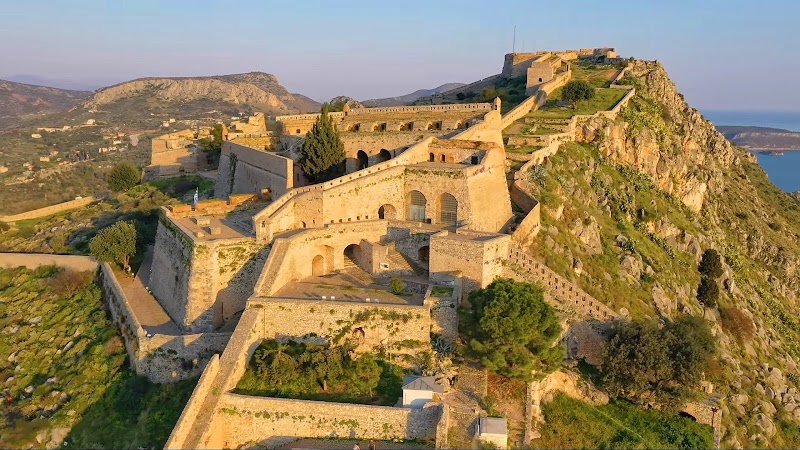
Palamidi Fortress
landmark

Palamidi Fortress

Nafplio's monumental hilltop citadel with sweeping views, but reached only via nearly 900 steps.

45 min · rated 4.7
Open in Google Maps

Look up. That's not a hill, that's a dare wearing a fortress on top of it — and somewhere between here and there are the famous stairs, give or take, depending on who you ask and how many times they stopped to catch their breath and pretend it was for the view.

My brothers and I used to race up hills like this back in Naples, and let me tell you, muscle memory does not care that you are forty-something and wearing the wrong shoes. There's no shortcut here, my friends, believe me, I have looked. The Venetians who built this thing were not thinking about tired tourists in sandals — they were thinking about cannons, sightlines, and keeping the Ottomans out. That is the whole design philosophy: straight up, no mercy, maximum view for whoever survives the climb.

And the view, when you get there, is the entire reason the Venetians picked this rock in the first place. From the top you can see the whole gulf, the old town packed in below like it's hiding, the sea doing that impossible blue thing it does around here. Bring water. Bring a hat. Bring a friend you don't mind complaining to, because you will complain, and that's part of the tradition too.

This place wasn't built for postcards, though it makes a spectacular one now — it was a working citadel, a piece of military architecture meant to hold a hilltop and a town at the same time, and it changed hands and purposes over the centuries the way fortresses do, ending up now as the landmark everyone in Nafplio points to and says "that's the one with the stairs."

Pace yourself going up — there are flatter stretches where you can pause without looking like you're pausing, use them. Once you're up top, look back down toward the harbor and the old town roofs for the shot everyone wants, then turn the other way toward the hills for the one nobody else bothers to take.

It's open 8 in the morning until 7 in the evening most days, so don't rush the sunrise assault — plenty of daylight to do this properly. When your legs remember how to be legs again, we'll walk the fifteen minutes over to Akronafplia, which I promise involves considerably fewer stairs and a very different kind of story.
2
Akronafplia
landmark

Akronafplia

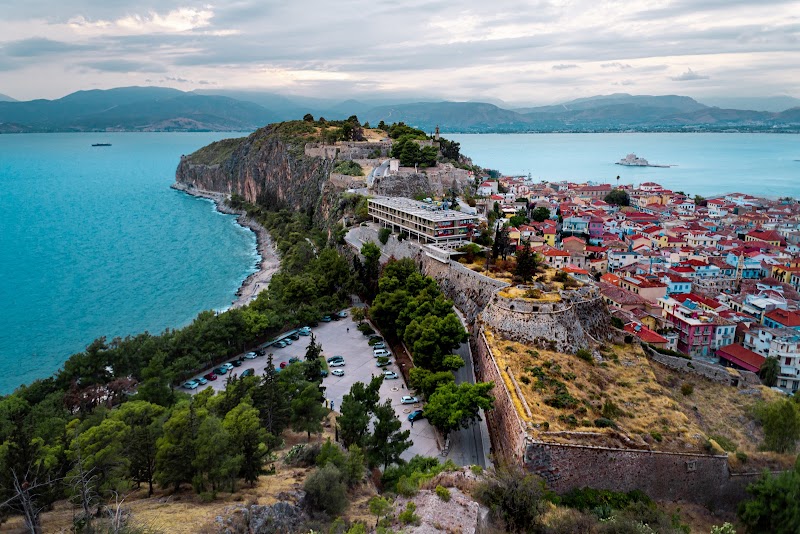
The oldest fortified hill in Nafplio, layered with Byzantine, Frankish and Venetian walls.

45 min · rated 4.7
Open in Google Maps

Look up at Palamidi behind us — nine hundred ninety-nine steps of Venetian ambition, they say, though I've never counted and neither has anyone with knees my age. Now look at THIS hill under our feet. Different story entirely. This one's older than old — this is where Nafplio actually started, way back before anyone thought "let's build a fortress on the impossible peak next door."

Akronafplia's not one wall, it's about five or six walls wearing each other like a Neapolitan grandmother wears cardigans — one on top of the other, never quite taking the old one off. Byzantine masons laid the first stones. Then the Franks came through and built their bit. Then the Venetians — twice, actually, because they lost this place and came back for seconds — added their own layer on top of that. You can see the seams if you look close: the stone changes, the technique changes, like reading tree rings, except the tree is a war.

Here's what I love: for centuries THIS was the whole city. Not Palamidi — that came later, the show-off cousin. Akronafplia was the original citadel, the reason Nafplio existed at all as somewhere worth defending. Everybody who wanted this coastline had to want this hill first.

Locals don't come up here to gawk, by the way — this is where people take the evening walk that isn't full of tourist shuffle, where a couple comes to sit on a wall and share a beer looking at the Argolic Gulf and nobody's selling them a fridge magnet. That's the real use of this place now: quiet.

For the frame — stand with the old layered wall in the foreground, rough stone catching whatever texture the light gives it, and let the gulf open up behind it. One shot, three empires, and a very good view.

It's open mornings into afternoon, 8:30 to 3:30 most weekdays, so don't dawdle too long over your gelato before coming up. And when you're ready, it's a short seven-minute wander to the Church of Saint Spyridon — small church, big story, I'll tell you there.

3
Church of Saint Spyridon
temple

Church of Saint Spyridon

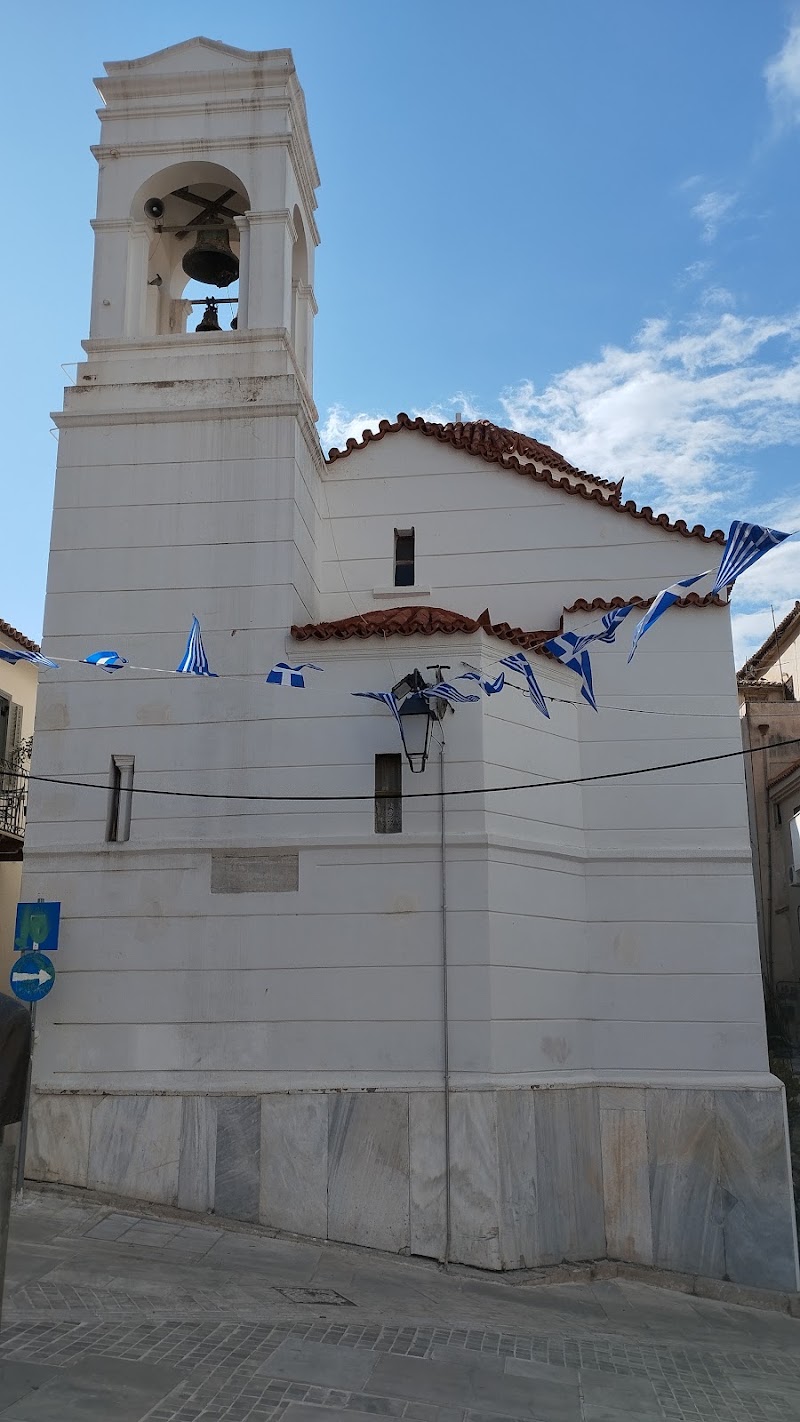
A modest church with an outsized history: this is where Governor Kapodistrias was assassinated in 1831.

15 min · rated 4.8
Open in Google Maps

See that little doorway there, the one you could almost walk past if you weren't looking? That's the spot. Not some grand cathedral with a dome you can see from the sea — just a modest stone facade on a narrow street. And that's exactly why I love bringing people here, because this unassuming little church is where Greece's first head of state, Ioannis Kapodistrias, was shot dead on the steps in 1831.

Think about that for a second. This man had been a foreign minister for the Russian Tsar, a serious international statesman, and he comes home to build a nation from scratch out of a war-torn peninsula — and it ends right here, on a Sunday morning, walking to church, by men from a rival family who felt he'd insulted their honor. Politics in Greece has never exactly been gentle, but this was the opening scene.

I always tell people: forget the myth of marble staircases and dramatic squares for this kind of history. Real history happens on modest steps in front of small churches, on a Tuesday, while people are just trying to go pray. That's what gets me every time I stand here — the size of the event completely outgrows the size of the place.

Go ahead and step inside if the door's open — it usually is, this place doesn't really close, day or night, it's open right around the clock. Quiet, unassuming inside too. Light a candle if you like, nobody will rush you.

Before you go, just stand where he would have stood and look at the doorway itself — that's your frame, simple stone against the little street, no need for anything fancier. It tells the whole story without a single explanation plaque.

And when you're ready, it's a two-minute stroll to Staikopoulou — which, fair warning, smells like grilled souvlaki and will absolutely test your willpower.

4
Staikopoulou
neighborhood

Staikopoulou

A cobbled lane of tavernas, worry-bead shops and craft workshops that locals still call their own.

40 min
Open in Google Maps

Feel that under your feet? That's not decoration, my friend — that's real cobblestone, laid down for feet like yours, and it's going to walk you straight from quiet churchyard into full sensory chaos in about ninety seconds.

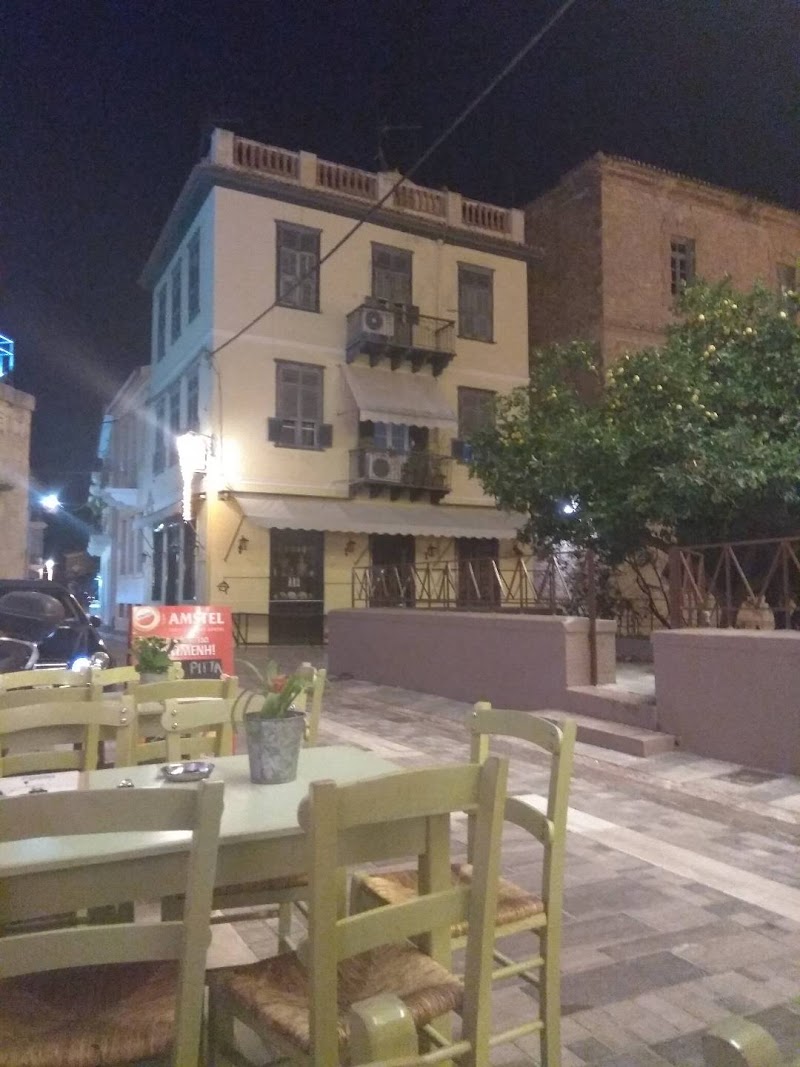
This is Staikopoulou, and here's the thing — every guidebook photographs it, sure, but the people eating lunch on the left side, three tables deep, under the awning with no menu translated into English? Those are Nafplians. Not tourists. This street still belongs to the neighborhood, even with all of us wandering through it with our cameras out.

Walk it slow. You'll pass tavernas with grills going right out onto the cobbles — that smoky char-lamb smell is doing half the marketing for them, no sign needed — and between the restaurants, little workshops: worry beads strung by hand, leather, ceramics, the kind of shop where the guy behind the counter made the thing you're holding. Not imported. Made here, probably by someone whose grandfather did the same trade on the same street.

I always tell people — don't just walk Staikopoulou to get somewhere, because that's exactly what everyone does, and then they miss it entirely. Slow down, let a taverna owner half-heartedly try to seat you, say no if you're not hungry yet, and just enjoy being heckled a little. It's a Greek street sport. No hard feelings either side.

One frame worth grabbing: look straight down the lane where the cobblestones narrow between two buildings — café tables spilling out on both sides, laundry or bunting sometimes strung overhead. That's your postcard, no filter needed.

From here it's a two-minute stroll to Syntagma Square — the street practically funnels you there, so just keep drifting downhill with the crowd and you'll pop out into all that open space and grand old buildings before you know it.

5
Syntagma Square - Nafplio
landmark

Syntagma Square - Nafplio

The elegant marble-paved heart of Nafplio, ringed by Venetian and neoclassical facades.

20 min · rated 4.8
Open in Google Maps

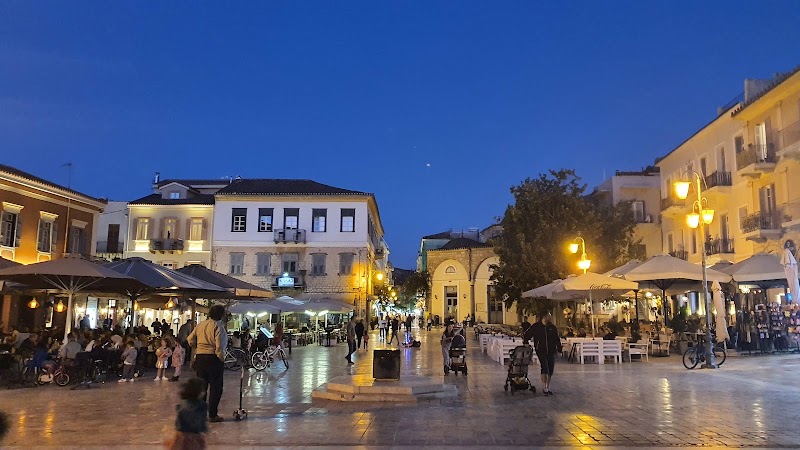
Feel that under your feet? That's marble, real marble, polished smooth by about two centuries of people just like you wandering across it wondering where to get a coffee. That's basically the main job of this square, by the way. It's been the town's living room since Nafplio stopped being a fortress-obsessed garrison town and started being, well, this.

Look around at the frame of buildings holding this space together — you've got Venetian bones underneath a neoclassical dress, which is very on-brand for Nafplio. This city changed hands so many times — Venetians, Ottomans, Venetians again, then the Greeks — that half the buildings here look like they're wearing several coats at once and just decided not to pick one. Somewhere in that mix is the old mosque that later did time as a courthouse and a cinema, which is the kind of career change most buildings only dream of.

Here's the fun part: this was, briefly, the beating heart of an entire nation. Nafplio was the first capital of modern Greece, and this square is where that whole experiment in "let's be a country now" was headquartered. Government offices, ceremonies, the works — all happening right where you're now deciding whether to sit down and people-watch.

And people-watching is exactly what locals still do here. This isn't a roped-off monument you admire from a distance — Nafplians actually use this square. Kids on bikes cutting diagonal lines across the marble, old men parked at the same café table for what looks like decades, evening volta strolls where half the town seems to walk past the other half on purpose. Tourists tend to snap a photo and move on; locals treat it like their office, minus the actual work.

For your one shot here: stand with your back to the row of cafés and frame the square so you get that patchwork of façades in the background — the mix of styles is the whole story in one image, no caption needed.

One more thing — since opening hours are technically "24 hours, forever," this square never really closes. Worth remembering if you ever find yourself here at 2am for reasons that seemed logical at the time.

Right, caffeine acquired or not, let's keep moving — the Archaeological Museum is about one minute from here, practically next door, and it's got a much better attitude toward ancient helmets than I do toward mornings.

6
Archaeological Museum of Nafplio
museum

Archaeological Museum of Nafplio

Bronze Age armor and Mycenaean treasures housed inside a handsome 18th-century Venetian warehouse.

55 min · rated 4.7
Open in Google Maps

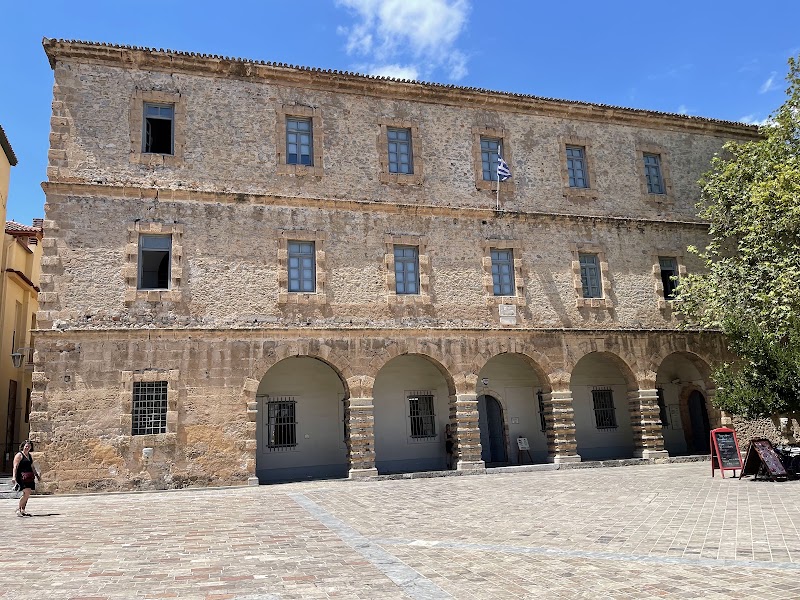
Look at those arches first, before you even go in — that's Venetian stonework, built to store galley supplies, sails, ropes, the whole nautical junk drawer of a maritime empire. And now, inside this same sturdy warehouse, you've got a bronze suit of armor that's older than most countries currently in existence. Not a bad career change for a building.

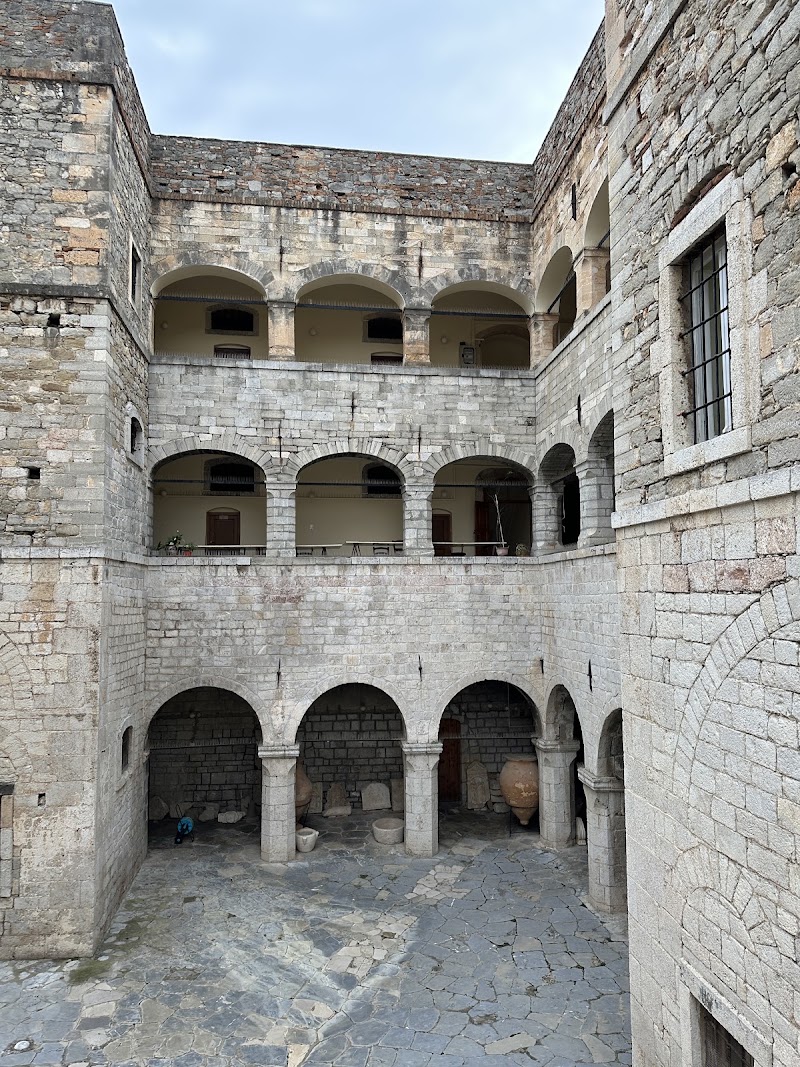
That armor, by the way, is the real star — a full Mycenaean panoply, bronze plates head to... well, torso, found not far from here at Dendra. Picture some Bronze Age warrior clanking into battle looking like a very fashionable trash can, and yet it worked, because here we are three thousand-odd years later still talking about it. There's a boar's-tusk helmet too, which sounds like something a very committed hunter invented after a bad day, and honestly, that's roughly what happened.

What I love about this place is the honesty of it — the warehouse never pretended to be a temple or a palace, it was built to be useful, and the Greek Archaeological Service simply looked at those cool stone arches in the 1950s and thought, well, this'll do nicely for pottery and armor too. So you've got two histories stacked on top of each other: Venetian maritime muscle on the outside, Mycenaean warrior culture on the inside. Nafplio in a nutshell, really — everybody who ever sailed past this town left something behind.

Locals mostly walk past it a hundred times without going in, which is a crime, honestly, because it's cool, it's quiet, and it's air-conditioned — an excellent tactical retreat from the square at midday. Tourists tend to duck in for twenty minutes on the way to somewhere else, take one photo of the armor, and leave. Give it more than that if you can.

Do check the hours before you get your heart set on it — it's open Monday but shut Tuesday, so don't let today be the wrong day to fall in love with Bronze Age bling.

For a photo, frame the doorway arch with the square's light behind you and the dark room swallowing it up front — nice contrast, stone against stone, three centuries apart.

Right next door, less than a minute's stroll, is the Vouleftiko — Greece's first parliament building, which is a very short walk but a very large leap in the story, from warriors to democracy in about fifteen steps.

7
Vouleftiko - First Parliament of Greece
landmark

Vouleftiko - First Parliament of Greece

A converted Ottoman mosque where Greece's first parliament once debated its future.

35 min · rated 4.6
Open in Google Maps

Look at that dome for a second — squat, simple, built for a mosque, and inside it, once upon a time, grown men in mismatched uniforms stood up and shouted at each other about what kind of country Greece was going to be. That is the whole beautiful contradiction of this building right here.

The Ottomans built it as a mosque, back when Nafplio was one of their strongholds on this coast — this whole square, Staikopoulou, would have had the call to prayer ringing off these walls. Then Greece won its independence, Nafplio became the first capital of the new state, and suddenly this town had a war but no parliament building. So they looked around and said, well, there's a perfectly good domed hall sitting right there — and the Vouleftiko was born, Ottoman bones wearing a very Greek new job title.

I love that nobody tore it down to make a point. That's very Nafplio, actually — this whole town recycles its buildings like a grandmother recycles yogurt containers, nothing gets wasted, everything gets a second career. A mosque becomes a parliament. History doesn't erase itself here, it just gets promoted.

Stand back and frame it with the square in front — low, plain stone walls, that one dome doing all the visual talking. There's no minaret standing anymore, so what you're looking at is really the shape of a room that mattered more for what was said inside it than for how it looks outside, which, if you think about it, is true of most parliaments.

It keeps modest hours — mornings only, roughly nine to one on weekdays — so if the door's open, put your head inside for two minutes; the emptiness of it is the point, you're standing in the actual room, not a replica.

From here it's a short hop, maybe four minutes on foot, up to Five Brothers — good spot to catch your breath and get some elevation before we keep going.

8
Five Brothers
viewpoint

Five Brothers

A forgotten Venetian gun battery with rusting cannons and one of the best quiet views over the gulf.

20 min · rated 4.6
Open in Google Maps

Five cannons, not five brothers — and nobody remembers which joker started calling them that, but the name stuck like retsina on a tablecloth.

Count them with me. Five iron barrels, pointed out at the gulf, doing absolutely nothing now except rusting beautifully in the sun. When the Venetians put this battery here, it was dead serious business — Nafplio was a fortress town wearing walls like armor, and every gun placement was a sentence in a very pointed conversation with anyone sailing in uninvited. Now the only thing these guns fire at is your camera roll.

That's the joke about Nafplio, really — half the city was built to keep people out, and now it can't keep them away. You're standing on what used to be a nervous, watchful edge of town. Today it's the edge everyone forgets to walk to, which is exactly why I like bringing people here. No ticket booth, no queue, no gift shop selling little plastic cannons — just old stone, old iron, and a view that the Venetian gunners technically had first but definitely appreciated less, seeing as they were mostly worried about getting shot at.

This is also a proper local spot, not a tour-bus stop — you'll see Nafplio couples here in the evening doing absolutely nothing, which is the highest form of local activity there is. Sit on the wall like they do. Let your legs dangle over eight hundred years of Venetian engineering. Nobody will stop you; there's nobody here to stop you.

For the photo: stand behind the cannons, not beside them, so the barrels line up pointing toward the water with the gulf and the hills across it doing the rest of the work. One frame, five guns, one very unbothered sea.

From here it's a short, easy walk — five minutes, maybe less if you're chatting — down to the Arvanitia lighthouse, where the coastal path starts properly. Let the cannons have the last word here, though. They've earned a quiet retirement.

9
Arvanitia Lighthouse
nature

Arvanitia Lighthouse

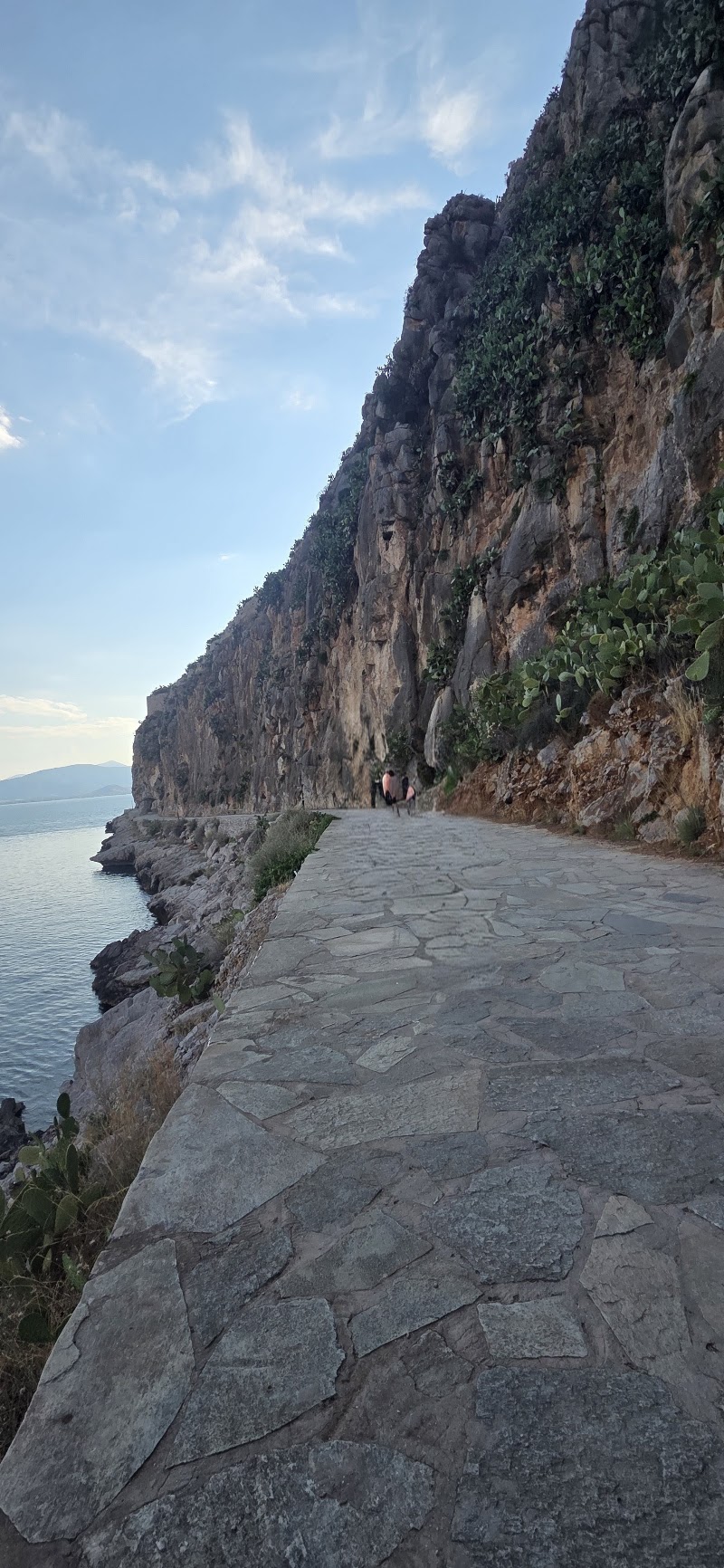
A flat, breezy seaside walk beneath the cliffs of Akronafplia, popular with locals rather than tour groups.

45 min · rated 4.7
Open in Google Maps

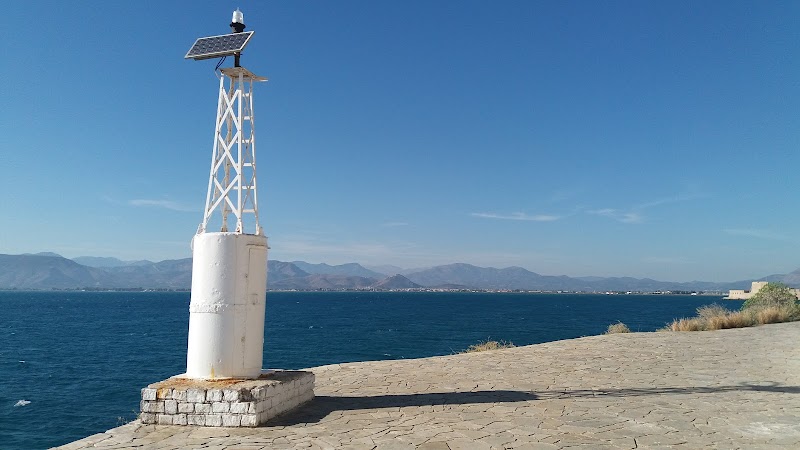
Feel that? No tour flags, no umbrellas held up in the air, no fifteen languages colliding at once. Just wind, water, and a few Nafplians walking their dogs like this little lighthouse isn't one of the prettiest ignored things in the whole Peloponnese.

That's the thing about this spot — it's not trying to be a monument. It's not roped off, there's no plaque demanding your attention, no guy selling tickets. It just sits here at the edge of the walk, doing its quiet lighthouse business under the cliffs of Akronafplia, and the locals have basically adopted it as their own personal thinking bench. You'll see old-timers parked on the rocks nearby with a coffee, teenagers with their feet dangling over the edge pretending to be moody, and me, occasionally, doing absolutely nothing productive and loving it.

Look up and behind you — that wall of rock climbing straight into the sky is Akronafplia, the oldest fortified part of Nafplio, and this little lighthouse is basically its polite little footnote at sea level. Everything up there is castle and centuries and Venetians and Byzantines arguing over stones. Down here, it's just structure, sea, breeze — the quiet cousin at the family reunion who you actually enjoy talking to.

I can't hand you a legend for this exact lighthouse — and I won't invent one just to fill the silence, much as my Neapolitan blood wants a good story right now. What I can tell you is what's true: this stretch is functional, it's loved by residents rather than photographed to death by tour groups, and that alone makes it worth the two minutes you're spending here. Not every stop needs a myth. Some just need good air.

Frame your shot with the lighthouse low in the corner and Akronafplia's cliff face filling the rest — that contrast of small manmade thing against big ancient rock is the whole personality of this place in one photo.

Next stop's practically already under your feet — Promenade d'Arvanitia continues right along this same walk, maybe a minute from here. Let's keep strolling, the sea's not going anywhere and neither, apparently, are we.

10
Promenade d’Arvanitia
viewpoint

Promenade d’Arvanitia

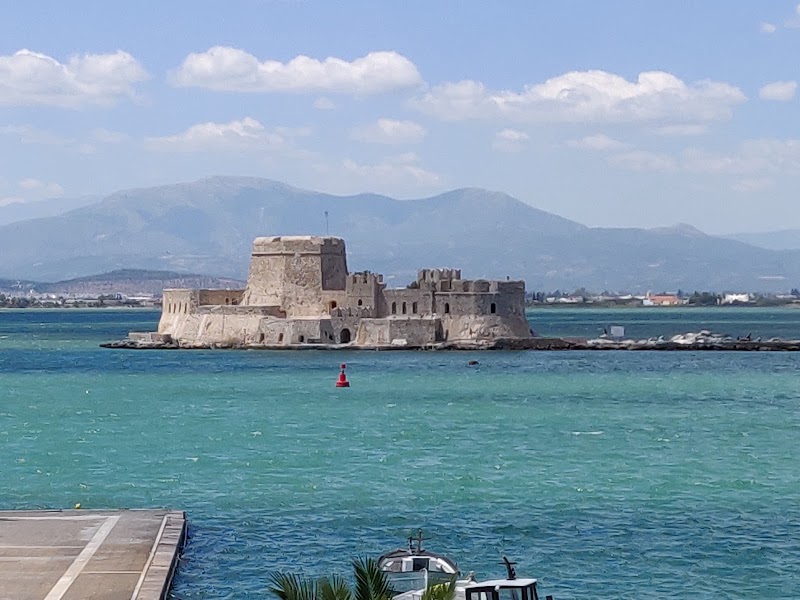
Stroll the harbor road where fishing boats bob beneath the little sea-fortress of Bourtzi.

35 min · rated 4.6
Open in Google Maps

You know what my brother Luca used to say about walking paths like this one? He'd say a real path doesn't need a sign, it just needs your feet to agree with it. And this one — this stretch hugging the water between the old town and the sea — your feet will agree with it immediately.

Look at where you're standing. On one side you've got the walls of the Acronafplia holding everything up like they've got somewhere important to be, and on the other, the water's doing that lazy Aegean thing where it can't decide between blue and green, so it just does both. And right out there, sitting in the harbor like it owns the place — which, historically, it kind of did — is Bourtzi. Little fortress, big attitude, built to keep the wrong ships out of the bay. From here you get it at sea level, low and close, not the postcard-from-above version. Better, if you ask me.

This whole promenade is a walking route, plain and simple, and that's exactly its charm — it's not trying to be a monument, it's just doing its job, which is getting you from the base of the fortress hill to the town without ever losing sight of the water. Fishing boats bob along here doing absolutely nothing productive, which is the most Mediterranean form of productivity there is. Locals jog it in the morning before the heat gets ideas. Old-timers walk it slow in the evening with their hands behind their backs like tiny admirals inspecting the fleet.

There's no ticket, no gate, no queue — which after a full day of climbing and photographing and squinting at plaques, is honestly the best gift a place can give you. Just pavement, sea air, and Bourtzi keeping you company the whole way.

For your last stretch of the day: keep the fortress on your outside shoulder as you walk, let the town walls trail behind you, and don't rush it — this is the kind of path built for arriving somewhere without noticing you've arrived. When you feel your legs finally loosen up and your brain go quiet, that's your cue — that's the walk doing exactly what it's meant to do. Good way to end things, eh? Not with a bang, but with the sound of water against old stone and your own footsteps agreeing with the ground.

Walking map of the route
Powered by Geoapify · © OpenMapTiles · © OpenStreetMap contributors
Behind the day

How it was made

Built around

Interests
HistoryArchitectureLocal lifeHidden gemsNature

Shape of the day

Length
6 hours planned
Time of day
Morning start
Pace
Balanced

Asked for

Narrated in
English
Planned and narrated by Pocket Tour Guide from these answers.
Before you go

Nafplio essentials

Food & money

Food delivery
Money
Euro (EUR). Mostly card, but cash is used in smaller establishments.
Tipping
Tipping is appreciated but not obligatory; typically round up or leave up to 10% in restaurants.

Emergency & safety

Emergency
General 112
Police 100
Ambulance 166
Hospitals
Nafplion Hospital, Argolis · +30 2752 360 400
Argos General Hospital, Argos · +30 2751 361 800

Good to know

Power
Type C and F plugs, 230V.
Tap water
Tap water is not always safe to drink; bottled water is recommended.
Phrases
Kalimera (Good morning), Efharisto (Thank you), Parakalo (Please/You're welcome).
Etiquette
Dress modestly when visiting churches. Greeks appreciate politeness and a calm demeanor.

Watch out for

Bag-snatching at Syntagma Square

Pickpockets and bag-snatchers operate near bus stops and crowded areas.

Keep your bag close and be vigilant with your belongings.
Taxi meter games

Some taxi drivers may not use the meter or claim it's broken.

Use Beat or insist on using the meter before starting the journey.
Overpriced seafood at waterfront tavernas

Some tavernas charge very high prices for seafood without displaying a menu.

Check the menu and prices beforehand or choose popular, well-reviewed locations.

Informed by UK FCDO travel advice (OGL v3).

Keep wandering

Other days, made public

Reykjavik
Reykjavik · Iceland

Sagas, Sculpture & Skyline Views

8 stops · by Mario
Tromsø
Tromsø · Norway

Arctic Stories & Wooden Tromsø

6 stops · by Mario
Chișinău
Chișinău · Moldova

Chișinău’s Civic Heart & Quiet Curiosities

7 stops · by Mario
Lefkada
Lefkada · Greece

Lagoon Light & Wooden-Laned Lefkada

7 stops · by Mario

Put a storyteller in your pocket.

Your next free afternoon deserves better than a top-10 list.

Made with ♥ and Pineapples by zuapp.me