Pocket Tour Guide
Bratislava
Bratislava · Slovakia

Castle Stones, Courtyards & Garden Light

4hDuration
5Stops
2.6 kmDistance
The city

Bratislava

Listen

Somewhere under that castle up there — the one that looks like an upside-down table, and yes, everyone says it, so I'm not even being original — there were Celts minting their own coins more than two thousand years ago, then Romans squinting at the Danube from the far bank, then a string of Slavic settlers who built the fortress that got rebuilt so many times nobody can agree which version counts as "the beginning." That's Bratislava for you: a city that's been important since before it had a proper name, and then spent centuries being politely overshadowed by its own neighbors. Vienna is an hour that way, Budapest a couple hours that way, and this little city in between got crowned the actual capital of Hungary for nearly three hundred years — coronations in St. Martin's Cathedral, eleven kings and a queen, the whole regal circus — and most visitors have no idea, because Bratislava has never once bragged about anything in its life.

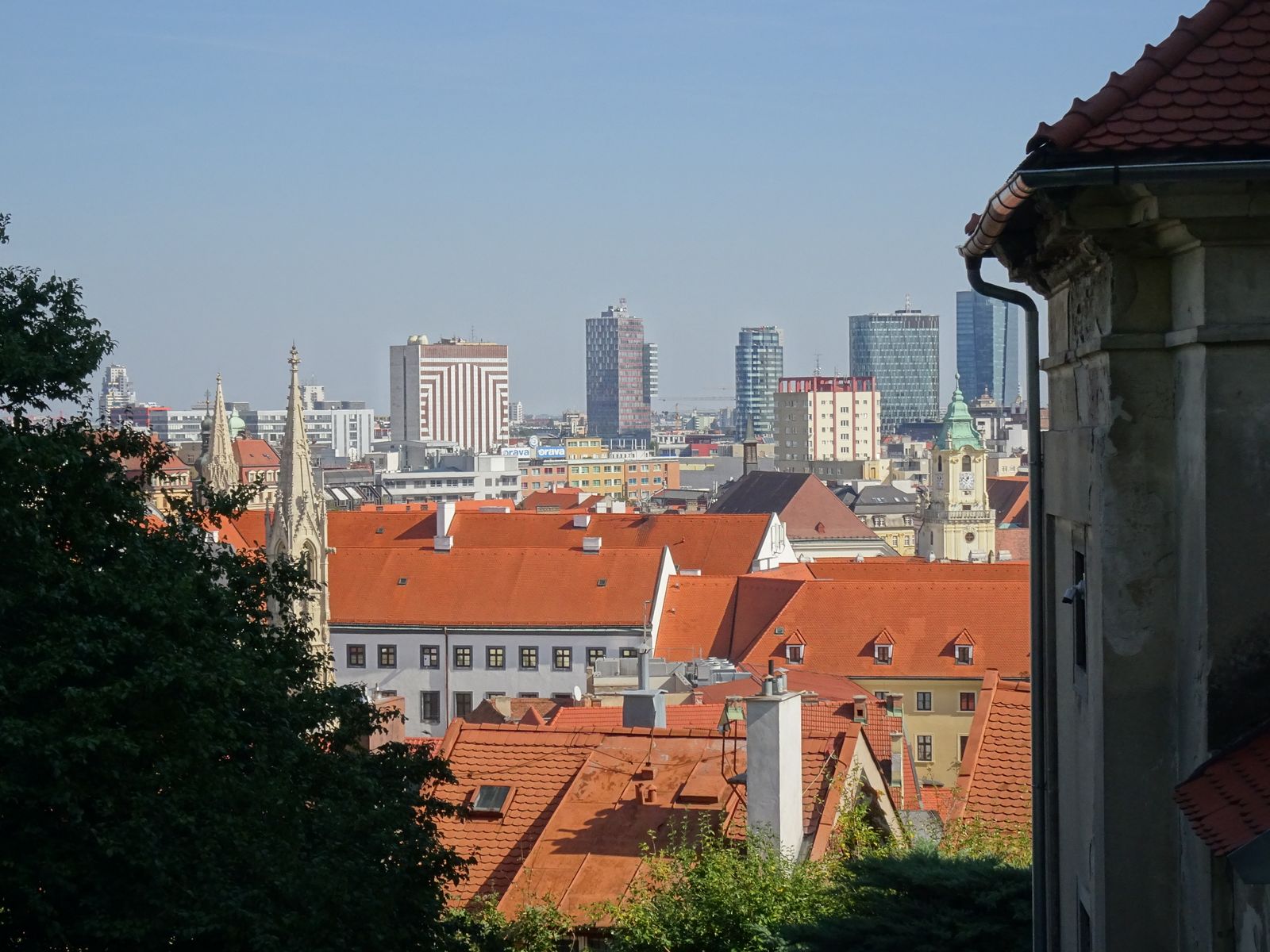
The old town is small enough that you'll "accidentally" see everything twice before lunch, which I consider a feature, not a navigational failure. Cobbled lanes, pastel baroque facades, a main square the size of a generous living room — and then bronze statues tucked into corners being weird on purpose: a grinning sewer worker popping out of a manhole, a Napoleon soldier leaning on a bench like he's been stood up on a date. Hang a left past the UFO-shaped tower on the new bridge and you're suddenly in a Soviet-era panelák skyline that tells the other half of the story, because this city did communism, revolution — the Gentle one, in '89, no less — and independence all in about one very eventful lifetime. Slovak is the language, Catholic mass bells still mark the hours, and if you're here in December the Christmas market mulled wine is basically a civic duty.

Population's a modest half a million or so, which makes it one of the smaller capitals in Europe — but here's the trivia that always lands: Bratislava is the only capital city in the world that borders two other countries, Austria and Hungary, close enough that in some spots you could stumble across a border on a bad sense of direction. Locals don't fuss about it. They gather at the Danube embankment in the evening, eat dumplings the size of fists at some unmarked pub that only the regulars know, and watch the castle light up like it's showing off for tourists even though it's really just showing off for itself.

So here's the mood for today — climb up to that castle courtyard for the view over the river and two countries you can basically wave at, then let yourself get pulled down into the crooked little streets where the real texture is: a courtyard café, a secondhand bookshop, a statue mid-prank. Bratislava doesn't perform for you. It just carries on being quietly, stubbornly itself, and the fun is in catching it in the act.

The route

5 stops through Bratislava

1
Bratislava Castle
landmark

Bratislava Castle

Reconstructed Baroque castle dating back to 907 A.D. & national museum located on a hilltop.

45 min · rated 4.5
Open in Google Maps

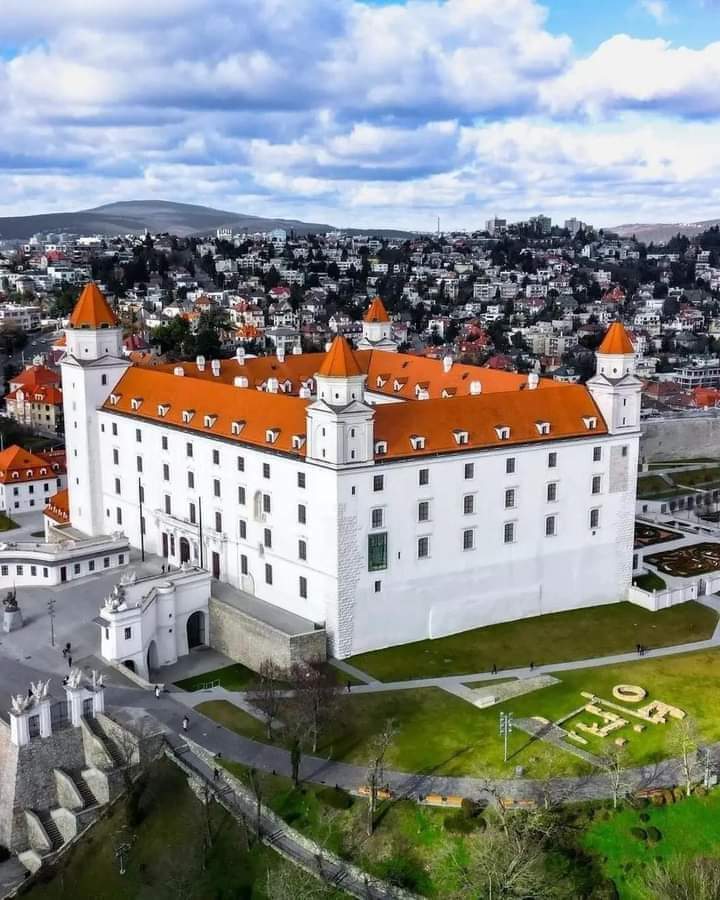
Look at it from down here first — that big white rectangular block sitting up on the hill, four towers, one at each corner, like someone turned an upside-down table on its back and called it a palace. My brothers and I used to joke that it looks like a castle built by committee, and honestly, that's not far from the truth, because this thing has been knocked down, rebuilt, burned, and reborn more times than my grandmother's favorite soup recipe.

The hill itself has been fortified since the 9th century — we're talking 907 A.D. in the records, which, let me tell you, is old even by my standards, and I once got lost in a church crypt in Palermo that made me feel like a toddler. What you're seeing now, though, is mostly Baroque — the clean, confident, almost stubborn rectangle shape came later, after fires and wars and a very long nap where the castle sat half-ruined for decades. It got its serious reconstruction in the 1900s, and today it holds the National Museum, so a building that once worried about cannons now worries about climate control for old paintings. That's progress, I suppose.

Here's a number that always gets a laugh from visitors: the castle is open from 8 in the morning until 10 at night — that's practically a castle with the working hours of an espresso bar, and honestly, after enough stair-climbing on this hill, you'll want the espresso too.

Walk around to the courtyard side and look back toward the river — Bratislava spreads out there, rooftops and spires doing their own little performance for you, and it's the obvious frame for a photo: castle wall in the foreground, river and city stretching behind. Take your shot, catch your breath, and let's wander down toward Mačkafé — about eight minutes on foot — where the only fortification you'll need to storm is a good cup of coffee.
Listen
2
St. Martin's Cathedral
temple

St. Martin's Cathedral

Bratislava’s Gothic coronation church carries the history of eleven Hungarian kings and queens beneath its slender spire.

25 min · rated 4.6
Open in Google Maps

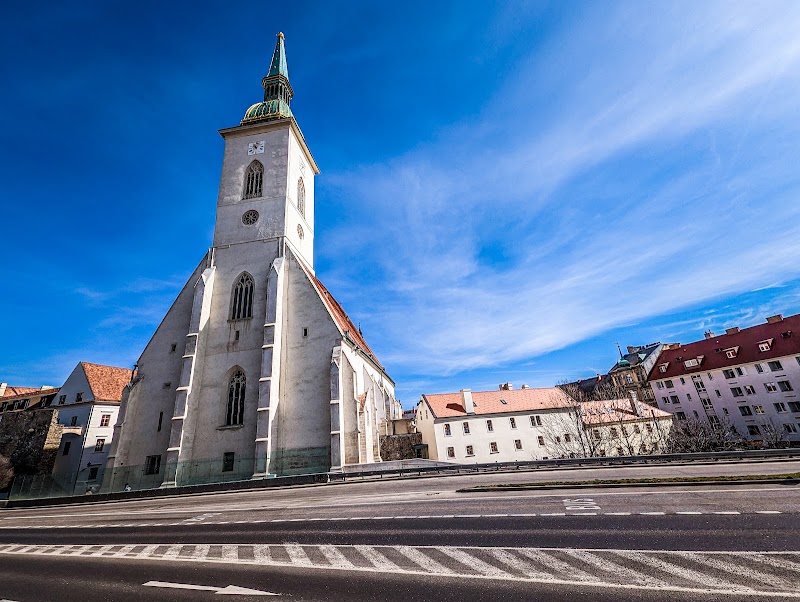
Look up. That spire isn't just tall for the sake of showing off — well, maybe a little — but mostly it's because for nearly three centuries, this was the church where the Kingdom of Hungary put crowns on heads. Eleven kings and queens, right here, under that very roof, back when Bratislava wasn't Bratislava at all but Pressburg, the substitute capital while Buda was busy being occupied by the Ottomans. Imagine being the archbishop in charge of coronation day — three naves, four chapels, and somewhere in the paperwork a note that says "don't forget the crown, we're borrowing the whole kingdom's dignity for the afternoon."

The style is that lovely Gothic-meets-Romanesque mix you get when a building's been growing for a long time rather than built in one confident afternoon — thirteenth century bones, later vaulting, the kind of layered construction where every century added its own opinion. Walk the exterior first and notice how the tower seems almost too slim for the body of the church beneath it, like someone commissioned a cathedral and then, at the last minute, asked for an exclamation point on top.

Inside, seek out the chapels — four of them, each a little side-story to the main plot, quieter corners where the crowds thin out even when the nave is busy. This is still a working parish church, mind you, not a museum piece behind velvet rope — locals come for Mass here same as they always have, which means you're a guest in someone's actual spiritual home, not just a ticket-holder.

For the best frame, stand back at Rudnayovo námestie and get the spire rising clean against the sky with the stone facade grounding it — the contrast between that delicate top and the solid Gothic weight below is the whole personality of the building in one shot. Then, when you're ready, it's a short seven-minute wander to Michael's Gate — last standing gate of the old city walls, and trust me, after a coronation church, a medieval gate feels like a nice change of pace.

3
Michael's Gate
landmark

Michael's Gate

The surviving medieval town gate frames one of Bratislava’s most photogenic cobbled lanes and rooftops.

25 min · rated 4.7
Open in Google Maps

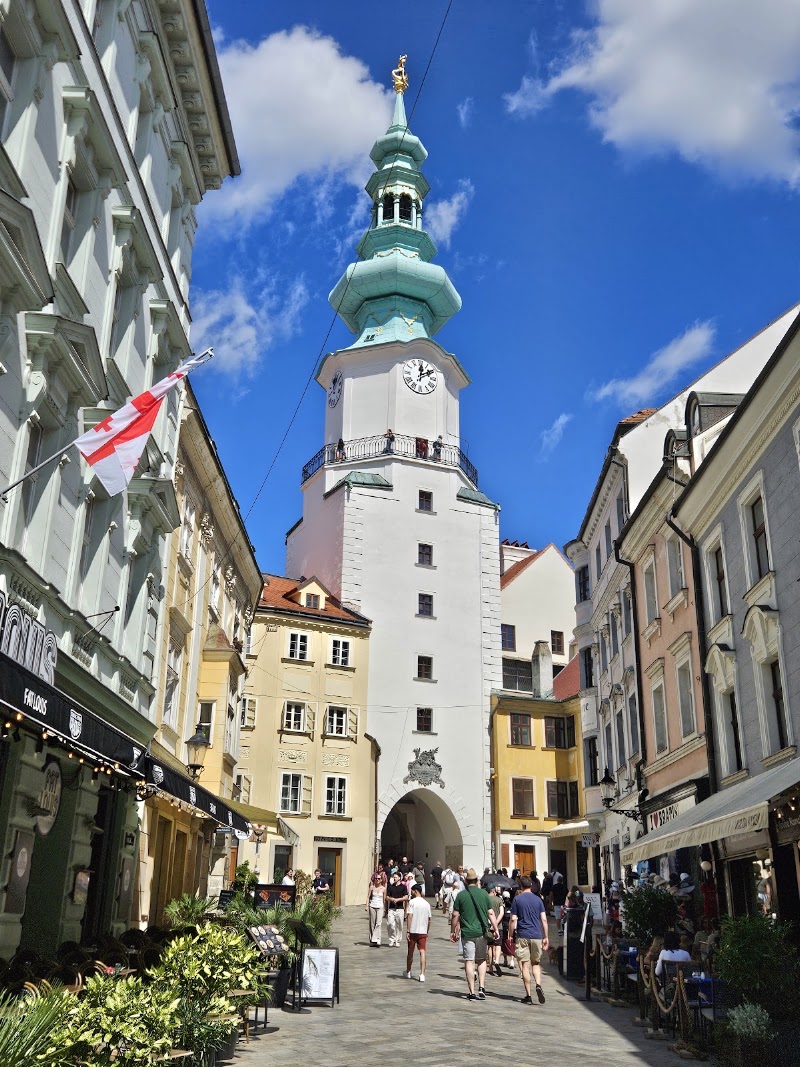
Look up. That's the only trick you need here — everybody walks under Michael's Gate staring at the cobbles because they're pretty, and they miss the tower doing its whole silent performance above them, green copper spire catching whatever light's around, watching the whole street like it's still got a job to do. Which, in a way, it does — this is the last of the original medieval gates still standing, the one survivor out of what used to ring the whole old town.

I love this spot because it's a cheat code for photographers. Stand back toward St. Michael's Street and you get the tower stacked against the rooftops behind it, that funnel of a lane narrowing exactly the way old defensive streets do — built tight on purpose, so nobody could charge through on horseback without regretting it. Nobody's charging anything today except maybe gelato, but the bones of the design are all still there if you know to look for them.

Here's the thing about gates like this one — they're never really about the stone, they're about control. Who gets in, who gets taxed, who gets stopped and questioned by some bored guard at eight in the morning. This was Bratislava's front door for centuries, and everyone who wasn't born inside the walls had to answer to it. Now the only thing interrogating you is whether you want to go left for a coffee or right for a wrong turn — my personal favorite kind of decision.

Give the arch itself a slow walk-through — run your hand along the stone if you like, it's earned the attention — and then let's drift toward the Presidential Garden, about fourteen minutes from here. After all this stone and shadow, you'll want something green.

4
Presidential Garden
nature

Presidential Garden

30 min · rated 4.5
Open in Google Maps

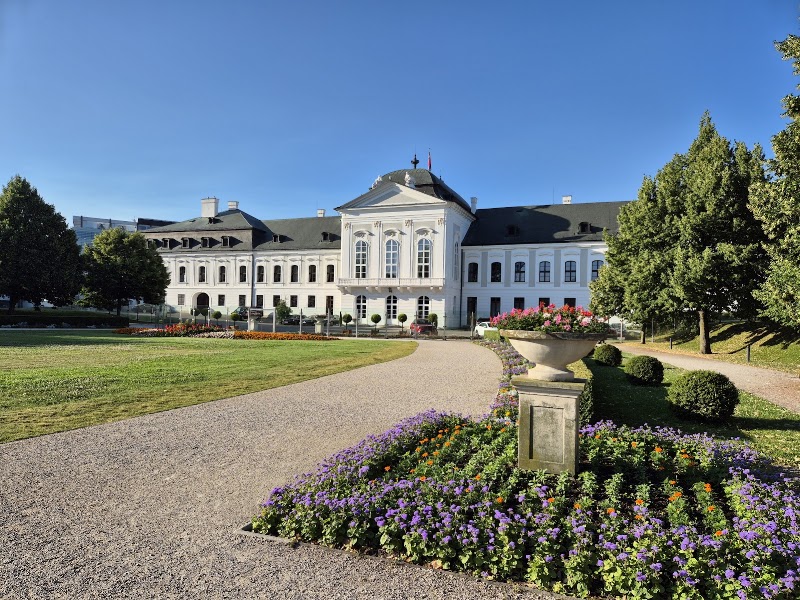
Look at this gate behind us — black iron, calm as a sleeping cat, and yet somewhere behind those trees sits the office of the President of Slovakia. No army of tourists storming the walls, no velvet rope drama. Just a garden that opens at six in the morning like it's got nothing to hide, which, considering who lives next door, I always find a little funny.

This used to be a private patch of green for people with considerably fancier business cards than yours or mine, back when the building behind it served different masters through the empires and republics that took turns running this city. Now the president's gardeners keep it, and somewhere along the way somebody decided the public could wander in too — which in my experience is rare, because normally the closer you get to power, the more fences multiply. Here, it's the opposite. Democracy smells like fresh-cut grass, apparently.

Locals treat it exactly like you'd hope — not as a monument to photograph and flee, but as a park. Mothers with strollers, old men reading newspapers on benches, lovers pretending to look at flowers while looking at each other. Nobody's rushing. That's the real trick of this place: it's grand enough to belong to a head of state, relaxed enough that you could take a nap on the lawn and no one would blink.

Walk the paths slowly, find the symmetry in the flowerbeds near the main axis, that's your postcard shot, clean lines with the palace as backdrop. Then let's drift onward — ten minutes on foot and we land at Zepen House, Georgian bistro, which means you're about to trade presidential gardens for something stuffed with cheese. A fair trade, I'd say.

5
Kuchajda
nature

Kuchajda

65 min · rated 4.2
Open in Google Maps

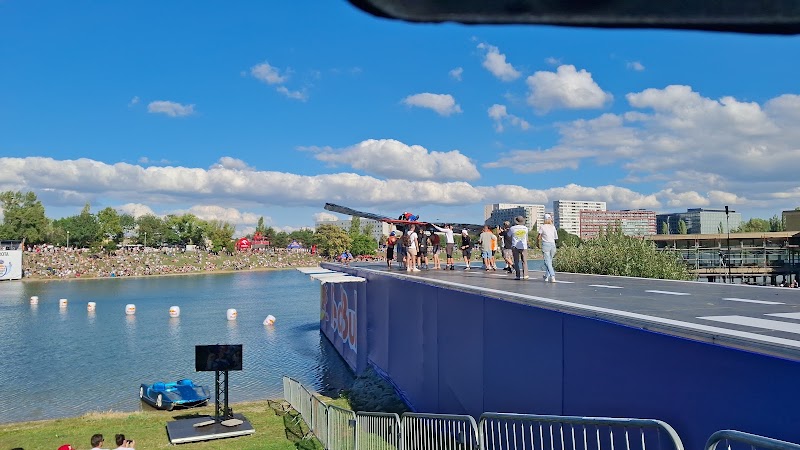
You know what I love about this spot? It's the opposite of everything we've seen today. No facades, no architects arguing about symmetry, no five-hundred-year-old stones with opinions. Just water, sky, and half of Nové Mesto jogging around it in questionable lycra.

Kuchajda is a lake — an artificial one, which always makes me laugh, because the Bratislavans basically decided "we need a beach" and then just built one, inland, in the middle of the city. No sea, no problem. That's very Central European thinking — practical, a little stubborn, slightly magnificent in its refusal to accept geography as a limitation.

And look what it became: this is where the city actually lives, not where the city performs for visitors. Open six in the morning to ten at night, every day — which tells you everything, because nobody keeps those hours for tourists. Those are hours for the man doing laps before work, the grandmother walking impossibly fast with ski poles, the teenagers who've claimed that one bench since forever. This is Bratislava in gym shorts, and honestly, after a day of churches and palaces, I think you've earned the right to just sit by some water and watch ordinary life happen for a while.

So here's my last piece of advice for today, and it's not complicated: find a spot on the grass, face the lake, put your phone away for ten minutes. No frame to compose, no fact to memorize — just the sound of this city exhaling after a long day, same as you. And with that, my friend, I release you back into Bratislava. It's been a genuine pleasure walking it with you.

Listen
Walking map of the route
Powered by Geoapify · © OpenMapTiles · © OpenStreetMap contributors
Behind the day

How it was made

Built around

Interests
HistoryArt & museumsNatureHidden gemsPhotography

Shape of the day

Length
6 hours planned
Time of day
Morning start
Pace
Balanced

Asked for

Food stop
Both
Access
Transport is fine (taxi, bus, bike)
Narrated in
English
Planned and narrated by Pocket Tour Guide from these answers.
Keep wandering

Other days, made public

Dijon
Dijon · France

Dijon: Nghệ thuật, đá cổ và những khu vườn kín đáo

9 stops · by Thơm
Ubud District
Ubud District · Indonesia

Sacred Groves & Ubud Stories

7 stops · by Mario
Reykjavik
Reykjavik · Iceland

Sagas, Sculpture & Skyline Views

8 stops · by Mario
Tromsø
Tromsø · Norway

Arctic Stories & Wooden Tromsø

6 stops · by Mario

Put a storyteller in your pocket.

Your next free afternoon deserves better than a top-10 list.

Made with ♥ and Pineapples by zuapp.me